What is the NCD Policy Lab?

The NCD Policy Lab aims to bridge evidence and policy and find innovative ways to further the global NCD Agenda.

Bridging evidence
to action

The NCD agenda is complex, requiring both evidence to be generated and this evidence to be used by policy makers nationally and globally. In recognition of the central role of bridging the gap between Science and Policy, with a focus of improving access to medicines, associated technologies and care for NCDs in all settings, including humanitarian emergencies, the NCD Policy Lab set out to contributing to the achievement of Universal Health Coverage by 2030.

Latest news

  • Workshop on cross-cutting advocacy priorities for access to NCD medicines, diagnostics and medical devices

    Driving coherence between technical expertise and advocay at a global and national levels for NCDs

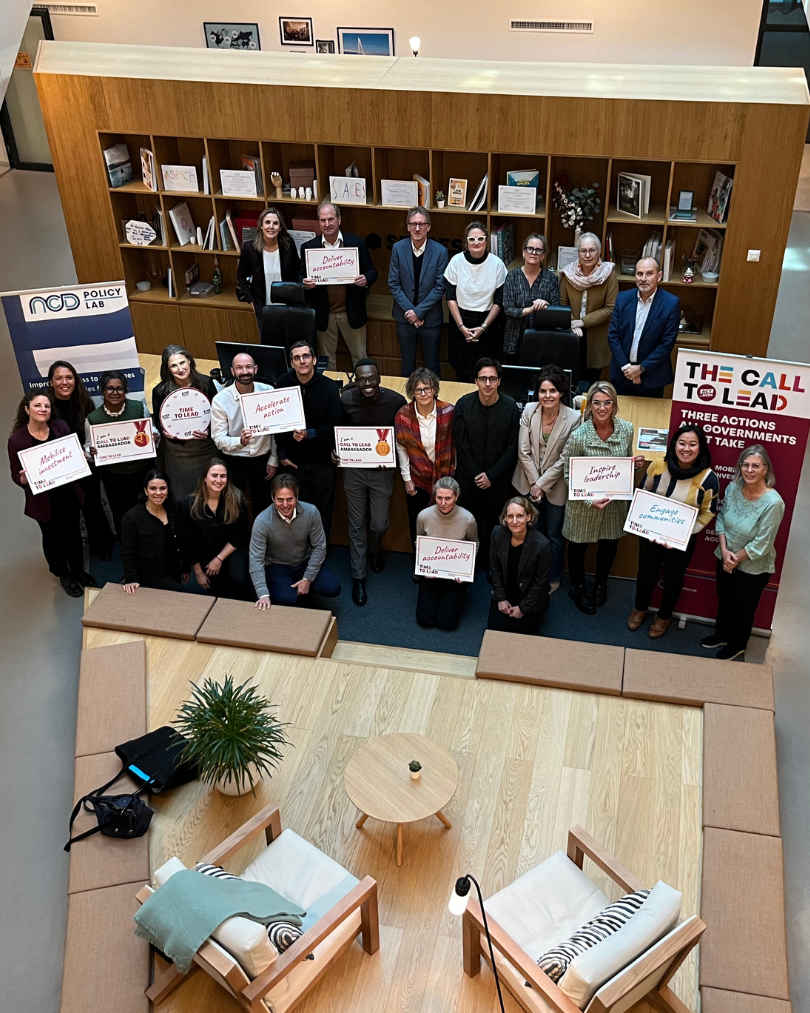
    On 27 November, the NCD Policy Lab partnered with the NCD Alliance to convene a targeted workshop dedicated to advancing access to essential NCD medicines, diagnostics, and medical devices.

    This session brought together experts from the World Health Organization, global access initiatives, civil-society organisations, and private-sector partners, creating a valuable forum to align priorities and identify concrete pathways forward. The workshop built on the momentum generated during last June’s Hackccess Hackathon, highlighting both the progress achieved and the innovative solutions now taking shape.

    Stay tuned for the next steps in developing a coordinated advocacy plan and advancing efforts to improve access to these essential medicines, diagnostics, and medical devices.

    Nov 27, 2025

    Read more
  • L’insuline : 100 ans d’existence, toujours pas universel

    The “Alumni Tuesday”, organised by Alumni UNIGE, event held on 14 October 2025 welcomed Prof. David Beran, assistant professor in the Division of Tropical & Humanitarian Medicine at the Faculty of Medicine UNIGE/HUG and Project team lead of the NCD Policy Lab.

    During the event, Prof. Beran shared his reflections on the global challenges surrounding access to insulin more than 100 years after its discovery, and engaged in a rich discussion with the audience on this critical issue.

    Oct 14, 2025

    Read more
  • Scientific outreach Training: strategies, techniques, and tools for health research

    Organizing Institutions: NCD Policy Lab, COHESION-I Project, and CRONICAS Center of Excellence in Chronic Diseases.

    This online training introduces scientific outreach strategies and their practical application in professional practice. Building on insights from Universidad de los Andes' Effective Scientific Outreach Strategies online training, this course equips project coordinators and research team members with practical skills for communicating complex health research to diverse audiences through various formats and channels.

    Scientific outreach Training: strategies, techniques, and tools for health research

    Session 1: Definition and models of science communication

    Session 2: Examples of applied models of science

    Session 3: Science storytelling

    Session 4: Engagement techniques

    Session 5: How to create a podcast or video

    Session 6: Examples of science communication events and outputs

    Session 7: How to write a good copy using artificial intelligence

    Session 8: Examples of bad and good AI uses for science communication

    Session 9: Data visualization and infographics training, key concepts

    Session 10: Data visualization and infographics training, tutorial

    Oct 9, 2025

    Read more

NCD Policy Lab functions

STRENGTHENING REGULATORY CAPACITY: Ensuring accessibility

STRENGTHENING REGULATORY CAPACITY: Ensuring accessibility

STRENGTHENING REGULATORY CAPACITY: Ensuring accessibility

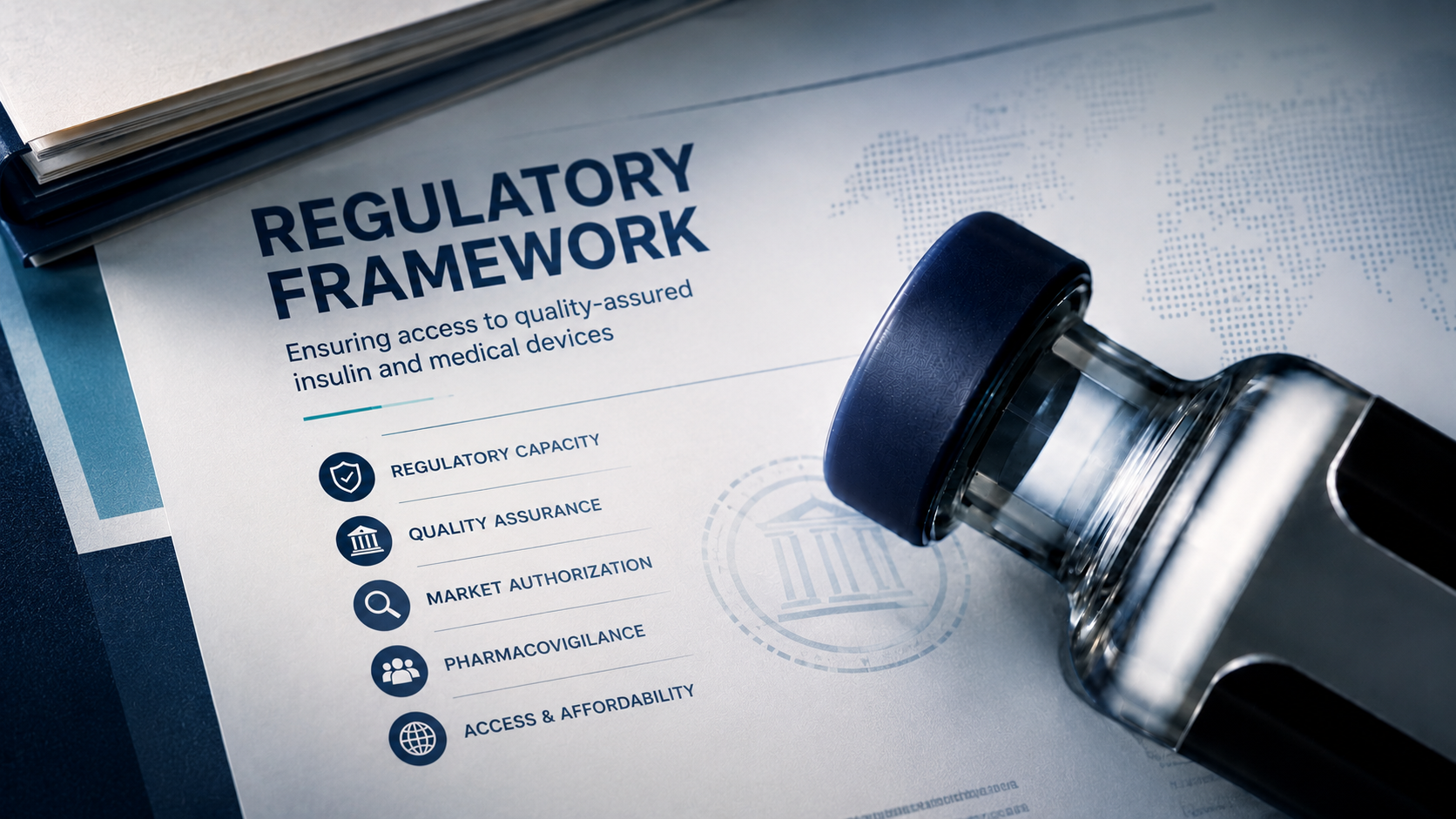
A barrier to access to NCD medicines that needs to be addressed is to guarantee that quality assured products are on the market. This requires strengthened regulatory capacity as well as using the unique tool which the WHO Prequalification offers. In the global pharmaceutical market the impact of biosimilars is estimated to be quite significant with the potential savings should these medicines be used instead of originators to be US$ 285 billion up to 2025 . It is argued that this has been fostered by regulatory frameworks for biosimilars being developed over the past 15 years. In 2021, a World Health Assembly (WHA) resolution promoted the “development of pathways for achieving targets for the prevention and control of diabetes, including access to insulin” with the request made to the WHO “to promote convergence and harmonization of regulatory requirements for diabetes medicines, including insulin, biosimilars, and other related health products that facilitate availability and access to safe and effective and quality-assured products, meeting standards set by the WHO and competent authorities”. The WHO Roadmap for access to medicines, vaccines, and other health products 2019-2023 paved the way on how access to effective and quality-assured health products for diabetes could be enhanced by investing in three core activities. National regulatory authorities (NRA) are responsible for ensuring the quality, safety, and efficacy of health products. Unfortunately, the capacity of many NRAs in Low- and Middle-Income countries (LMICs) remains limited, with as few as 30% globally having the capacity to perform all core regulatory functions defined by the WHO. The WHO Prequalification program aims to ensure that diagnostics, medicines, vaccines and immunizationrelated equipment, diagnostics and medical devices meet global standards of quality, safety, and efficacy. Products that have been assessed and prequalified by the WHO are eligible for international procurement and provide the extra assurance of quality, safety, and efficacy. The importance of prequalification is acknowledged globally, however the procedures and requirements to submit products to the program is seen as complex. In 2021, the WHO Global Diabetes Compact underlined the ability for the prequalification of insulins produced by more manufacturers to help increase the availability of quality-assured insulins to countries that are currently not meeting demand. Though, three years after the launch of pilot program at the WHO Prequalification programme on human insulins in 2019, it only resulted in the prequalification of human insulins from Novo Nordisk , one of the three originator multinational corporations dominating the market. As expressed in the WHO Global Diabetes Compact, many people affected by diabetes not only struggle to access insulin but also to quality-assured and affordable blood glucose meters and test strips. As per regulatory standards, meters and strips are considered In Vitro Diagnostic (IVD) medical devices while lancets are medical devices. According to a study set up by ACCISS in 2021, the regulation of selfmonitoring devices is not uniform, furthermore lack of regulatory oversight is identified in many LMICs. This variability may negatively impact the quality, safety and accuracy of these devices. To start addressing these concerns, the WHO Prequalification programme announced in 2019 the expansion of the scope of its work on IVDs to glucose meters and test strips.

INVESTIGATING POOLED PROCUREMENT INITIATIVES: Ensuring Availability

INVESTIGATING POOLED PROCUREMENT INITIATIVES: Ensuring Availability

INVESTIGATING POOLED PROCUREMENT INITIATIVES: Ensuring Availability

Once products have a regulatory “stamp of approval” they need to be purchased either by United Nations agencies, other central procurement organizations or countries. For this to be successful Pooled Procurement can be used as a means to achieve this. Pooled Procurement is a series of tools that can either combine demand between organizations or countries, share market intelligence, or provide information on prices and suppliers between purchasers. The term “Pooled Procurement” covers several concepts, from information sharing to centralized procurement through a centralized body on behalf of several countries . Pooled procurement could represent different types of collaborations and should not be reduced to the only possibility to contract and buy jointly at global or central level. It is often necessary for procurers to start sharing information to progressively build confidence, capacity, and trust before going into more concrete collaborations. It often starts as an initiative from purchasers WHO want to share information, best practices, and experiences with their peers. Pooled procurement for NCD products has been discussed since 2011 when a working group under the NCD Alliance produced a briefing paper with key interventions which could lead to improved access to NCD products in advance of the UN High-Level Meeting on NCD. In the WHO guideline for in-country pharmaceutical pricing policies, Pooled Procurement is also one of the policy options proposed to countries to improve prices of medical products more particularly when combined with other policies such as tendering and negotiations. A study was also commissioned by WHO in 2014, on existing regional and global Pooled Procurement mechanisms and lessons learnt from these mechanisms that could be applied to improve access to quality assured NCD essential medicines and technologies at country level. The WHO Roadmap for Access to Medicines, Vaccines, and other Health Products 2019-2023 includes activities to support “procurement and supply chain management for quality assured health products” and more particularly to “support collaborative approaches to strategic procurement of health products”. Pooled procurement has also been raised recently in several publications trying to document and analyze the current initiatives, to unpack the success factors, and highlight points to be considered when embarking in such an initiative. However, no real guidance has been provided to countries to understand when Pooled Procurement should be considered, how to promote this option to policy makers and to guide countries practically on how to establish a Pooled Procurement system at national or regional level looking at governance, financial, procurement and quality assurance systems necessary to ensure viability and sustainability of these initiatives. WHO is currently developing specifications for BGMs to further guide procurers in the development of their technical requirements for tenders. The main challenge with BGM is the fact strips are always linked to a specific brand device which means each time a tender exercise is done, the source of BGM being selected will often mean changing all devices available.

FOSTERING EVIDENCE-BASED POLICIES: Bridge the gap between Science & Policy

FOSTERING EVIDENCE-BASED POLICIES: Bridge the gap between Science & Policy

FOSTERING EVIDENCE-BASED POLICIES: Bridge the gap between Science & Policy

Beyond these two technical aspects, the overall complexity of improving access to NCD medicines, technologies and care needs to be addressed. In theory it is known what and how to address NCDs. However, in practice many challenges persist with a lack of implementing this theoretical knowledge adapted to different contexts. This implementation gap will be addressed by establishing a Policy Lab to bridge evidence and policy and find innovative ways to further the global NCD agenda. Many factors combine leading to the need of having a strong interface between research and policy to address the issue of access to NCD medicines and associated technologies. The NCD agenda is complex, requiring both evidence to be generated and this evidence to be used by policy makers nationally and globally. This sustains the aim of the NCD Policy Lab which is to bridge the gap between Science and Policy, with a focus of improving access to medicines, associated technologies and care for NCDs in all settings, including humanitarian emergencies, with a view of contributing to the achievement of Universal Health Coverage by 2030. The results and lessons learnt from the activities on Prequalification and Pooled Procurement will be disseminated through the Policy Lab focusing on the wider NCD agenda. Within the NCD space, there is a need for a platform for exchange between different partners that is independent. Building on the strategic partnerships that the DTHM has in Kyrgyzstan, Mali, and Peru, the NCD Policy Lab will also work at a national level to “translate” scientific outputs into useful materials that can be used by policy makers. The NCD Policy Lab is to be considered as an innovative model in order to foster interaction between researchers and policy makers. The concept behind the NCD Policy Lab is to work across four countries, Kyrgyzstan, Mali, Peru, and Switzerland, on three pillars of work, namely Research, Capacity Development and “Services à la Cité”.
Who is the NCD Policy Lab?

Supported by

ch