Commercial determinants of health and inequality in access to medicines
-
Activities
Workshops
Commercial determinants of health and inequality in access to medicines

Access to medicines: a major issue for the right to health
At the global level, access to healthcare, particularly to medicines, remains a major challenge for the right to health. Insulin, although discovered in 1921, is a striking example: its high cost and supply shortages make it difficult to access, especially in low- and middle-income countries, but also for certain vulnerable populations in high-income countries such as Switzerland.
In autumn 2025, a roundtable co-organised by Medicus Mundi Switzerland (MMS) examined the commercial barriers to equitable access to medicines. This roundtable provided a platform for discussing critical issues such as how to develop an integrated and ethical approach, engaging governments, non-state actors, and the private sector, to strengthen health systems, ensure equitable access to medicines in low- and middle-income countries, and address the challenges related to public health policy and international financing.
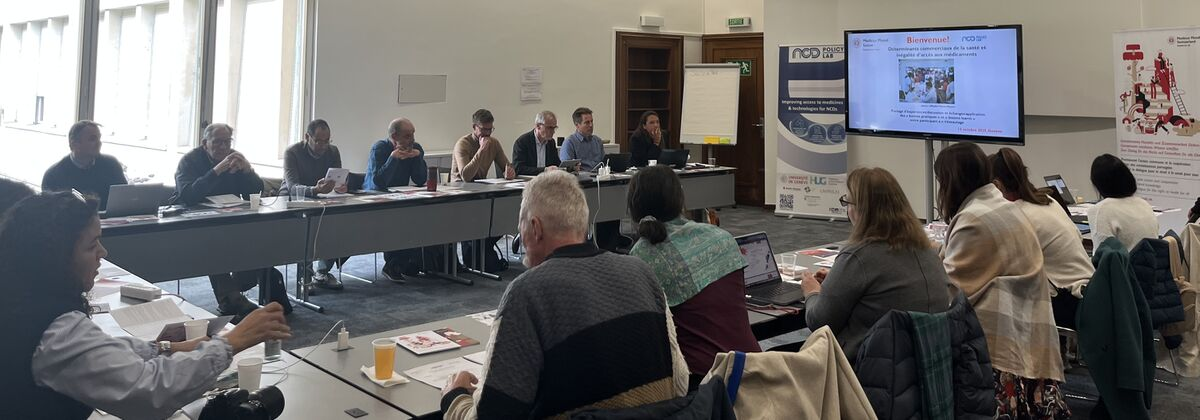
Three opening presentations helped frame this discussion:
Overview: Commercial determinants of health and access to medicines - the case of insulin, by Marina Giachino
Access to medicines: A country case study, by Jessica Zafra Tanaka
Medicine pricing and shortages: Not only a challenge for Low- and Middle-Income Countries (local case study: Switzerland), by David Beran
Access to antibiotics: A case study in the failure of the pharmaceutical economic model, by Nadya Wells
These presentations highlighted disparities in access to medicines and the roles played by different stakeholders. Through the examples of insulin and antibiotics, as well as contrasting health systems and issues related to medicine shortages and pricing, this first part of the roundtable shed light on both global challenges and more localized realities, particularly in Switzerland.
Discussions, Reflections, and Exchange of Experiences
The presentations were followed by an interactive session for discussion, reflection, and the sharing of experiences. Three working groups then deepened the conversation around three key questions. Across all three groups, several common messages emerged: the need for greater transparency, stronger accountability and responsibility, and sustained advocacy, highlighting the importance of a tripartite dialogue between the public, academia, and policymakers, as well as stronger coalitions among stakeholders.
Faced with these challenges, a collective and systemic response is essential. It is necessary to strengthen public regulation, ensure transparency in industrial practices, promote independent research, and guarantee universal access to essential medicines such as insulin.
This roundtable provided an opportunity to discuss and reflect on the various challenges and issues related to the commercial determinants of health, with a particular focus on access to medicines and insulin. Participants agreed that this is a critical topic. Indeed, barriers remain numerous, and significant progress is still needed to achieve equity and justice in access to care. Addressing the commercial determinants of health is a key lever for building more just, sustainable, and equitable health systems at both national and global levels.
Discover the roundtable detailed report
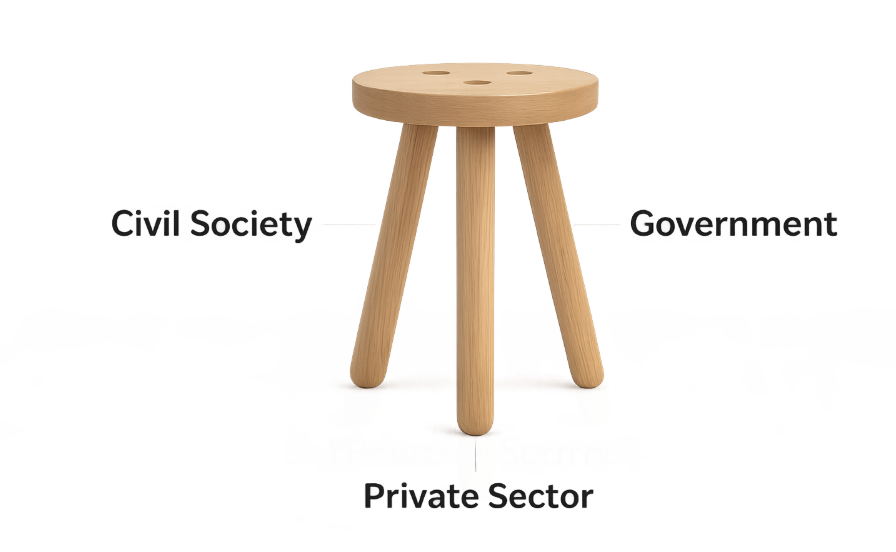
Equitable access to medicines is a major complex global health challenge. To improve access to medicines a variety of elements are needed, globally and nationally including ensuring transparency in industry practices, strengthening regulatory agencies, and promoting independent research. Using insulin as a tracer medicine helps understand this complexity and highlight the commercial determinants of these barriers. In order to change this paradigm governments, the private sector, and civil society all need to play a key role to guarantee universal access to essential medicines, such as insulin.
What we see with the case of access to insulin and many medicines is that the private sector’s power remains unchecked by governments and civil society. What we see with the case of access to insulin and many medicines is that the private sector’s power remains unchecked by governments and civil society.
Profits over health? Industry practices, medicine shortages, and the cost of care
Read the article
 .
.
- Date: Oct 15, 2025
- Co-organisers: NCD Policy Lab, Medicus Mundi Switzerland
- Documentation from the roundtable, including all presentations, available here